
The benefits of mindfulness in the workplace

By Carrie Kramer
Marketing
Enews
Read Time: 2 minutes
Posted: May 14, 2024
The demands of work can sometimes be stressful. According to a recent survey, 44% of employees worldwide reported experiencing “a lot of stress” in the past day. Although stress can be part of the daily grind, there are simple and effective strategies to reduce and manage it, among which is mindfulness.
Mindfulness, a type of meditation, involves bringing focus to what you’re feeling and sensing in the present moment. It can encompass breathing techniques, intentional thought and other strategies. Along with reducing stress, mindfulness can have many other benefits for employees.
More employee engagement
Meditation has been shown to significantly decrease employee burnout. By spending more time in the moment, employees can stay fresh and navigate the challenges of a busy work life more effectively.
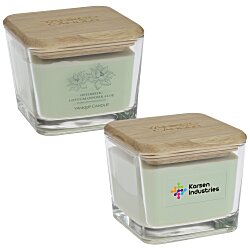
If your organization has daily meetings, set aside a few minutes for basic mindfulness exercises like breathing or stretching. Empower employees—either somebody who shows interest in taking the reins or on a rotation—to lead. Show your appreciation from time to time with a small thank-you gift, like a hot/cold pack for the person leading the daily stretch or a candle for the teammate who guides mindful breathing.

Better work performance
Studies on mindfulness suggest it can reduce stress at work by altering individuals' perceptions of tasks, making them seem less daunting. When employees view their work positively, stress levels decrease and goals appear more attainable. Additionally, filtering out distractions—such as thoughts about the past or future—can enhance focus.
Improved co-worker relationships
The core principle of mindfulness—being present—enables employees to set aside past conflicts or future challenges. This doesn’t mean all reflection or planning is cast aside, but rather that the present moment takes precedence. By letting go of that extra baggage, employees can interact with a clean slate and open lines of communication.
Establish a monthly award to acknowledge employees who promote mindfulness and contribute to a positive workplace culture. Each recipient can be rewarded with a gift, such as a paperweight or coffee mug, and be given the opportunity to nominate the next month's recipient, encouraging a cycle of recognition and mindfulness.


Better flexibility
Employees who slow down and focus on the present are more adept at handling unexpected challenges, rather than becoming preoccupied with changes or disruptions. Core mindfulness principles such as patience, presence, compassion and gratitude can prove invaluable in fast-paced or uncertain work environments.
Healthier employees
It's widely acknowledged that reducing stress is good for our mental and physical health. Research has shown meditation helps improve many health issues, including depression, insomnia, anxiety and high blood pressure.
Employees may have varying preferences for taking breaks and centring themselves, it's considerate to offer a range of resources. Consider providing notebooks as a tool for reflection and personal mantras or yoga mats to support physical mindfulness practices.


Mind what matters
Many workplaces already prioritize wellness through various programs and initiatives. Mindfulness practice, even in its simplest form, can complement and strengthen these existing efforts or serve as a catalyst for new initiatives. Moreover, it's worth noting that mindfulness is more prevalent than many realize, with over 26% of Canadians regularly engaging in meditation. By trying to reduce stress, employees can be happier and healthier—and so can your organization.

Carrie Kramer
Carrie Kramer is a merchandising category manager with more than 20 years of experience in the promotional products industry and has been part of 4imprint’s merchandising team for nearly two years. She brings extensive expertise in merchandising, product sourcing, and building strong vendor relationships. Working closely with product development partners—and always thinking creatively—Carrie continually seeks out the best promotional products to strengthen her category offerings. Her expertise and creative approach help ensure 4imprint remains at the forefront of wellness-related promotional trends.
All marks are the property of 4imprint or their respective owners.
Toniolo-Barrios, Mariana. “How does mindfulness reduce stress at work? A two-study examination using a stress appraisal perspec.” ScienceDirect, Dec. 2023, sciencedirect.com/science/article/abs/pii/S019188692300315X.
“Mindfulness.” Canadian Mental Health Association, 5 Dec. 2018, cmha.ca/brochure/mindfulness.
“Mental health and health-related behaviours during the COVID-19 pandemic,.” Statistics Canada, 12 May 2020, www150.statcan.gc.ca/n1/daily-quotidien/200512/dq200512b-eng.htm.
Maatta, Petri. “Key Mindfulness Statistics: Trends and Insights for 2024.” DreamMaker, 5 Jan. 2024, dreammakerr.com/mindfulness-statistics.
“State of the Global Workplace: 2023 Report.” Gallup, n.d, gallup.com/workplace/349484/state-of-the-global-workplace.aspx.
“Mindfulness Exercises.” Mayo Clinic, Mayo Clinic, 11 Oct. 22, mayoclinic.org/healthy-lifestyle/consumer-health/in-depth/mindfulness-exercises/art-20046356.